
Reviewed · MOUNT HOOD SCENIC TOURS
The Hood-Columbia Loop: Timberline, Orchards, and Waterfalls
Glacier views and waterfalls in one long loop. I love the small-group size and the guide’s pacing that keeps the day from feeling rushed, plus the included snacks and bottled water for the long drives between stops. One catch: the experience really depends on good weather, since clouds can mute the views from Mt. Hood and the Gorge.
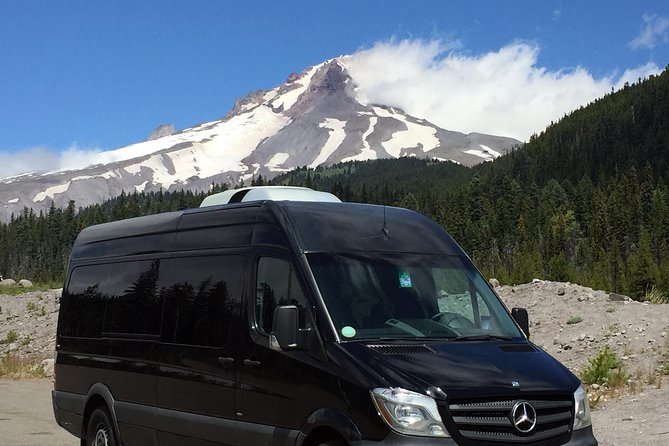
I also appreciate the comfort factor. The tour runs in an air-conditioned vehicle, and there’s a PA system so you can hear the guide even from the back. In the best versions of this day, I’ve seen guides like Cher, Halle, and Sam turn the drive into an education and a photo plan, not just transportation.
In This Review
- Key highlights at a glance
- How this loop works: Mount Hood plus the Columbia Gorge in one day
- Comfort and small-group attention make a real difference
- Mount Hood: Timberline Lodge views and the Palmer Glacier area
- Timberline Lodge itself: a 1930s landmark with year-round mountain life
- Quick orchard stops: Draper Girls and Apple Valley
- Hood River lunch hour: windsports, breweries, and real downtime
- Columbia River Gorge National Scenic Area: why the scenery changes fast
- Rowena Crest viewpoint: the eastern Gorge photo angle
- The historic highway drive: Switzerland-inspired engineering and waterfall passes
- Pacific Crest Trail crossing and the Bonneville Dam era stops
- The monolith and quirky waterfall moments you can’t slow down for
- Multnomah Falls: the top waterfall in Oregon and the big payoff
- Crossing the Sandy River: the trip back toward Portland
- Price and value: what $139 buys you in real time
- Best fit: who should book this Hood–Columbia loop
- Should you book it?
- FAQ
- What time does the tour start and where does it end?
- Is pickup available?
- How long is the tour?
- What’s included, and what isn’t?
- How many people are in the group?
- Does the tour run in any weather?
- FAQ
- Is the tour conducted in English?
- Are admission tickets included for the stops?
- Are service animals allowed?
- How far in advance should I book?
- When will I receive confirmation?
- What’s the cancellation window?
Key highlights at a glance
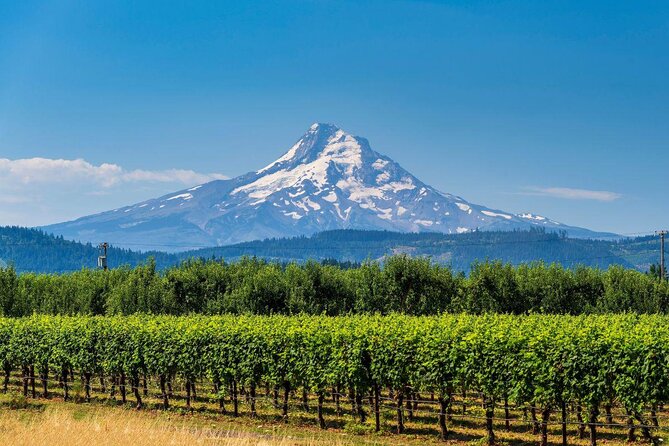
- Timberline Lodge time below Palmer Glacier with sweeping Mt. Hood views
- Multiple orchard/preserve stops that fit the schedule without dragging it out
- Hood River lunch hour in a town known for windsports and craft breweries
- Columbia Gorge National Scenic Area viewpoints and waterfalls across a long stretch
- Multnomah Falls stop plus extra quick waterfall sightings
- Max 14 travelers for personal attention and easier question time
Still chasing the mountain? More Mount Hood runs
- Mt Hood Day Trip from Portland to Multnomah Falls and Hood River★ 5.0 · 695 reviews
- Columbia River Gorge Waterfalls & Mt Hood Tour from Portland, OR★ 5.0 · 585 reviews
- Columbia Gorge Waterfalls and Mt. Hood Tour – Full Day★ 5.0 · 339 reviews
- Full-Day Mt Hood Waterfall Tour with Lunch and Wine Included★ 5.0 · 205 reviews
How this loop works: Mount Hood plus the Columbia Gorge in one day
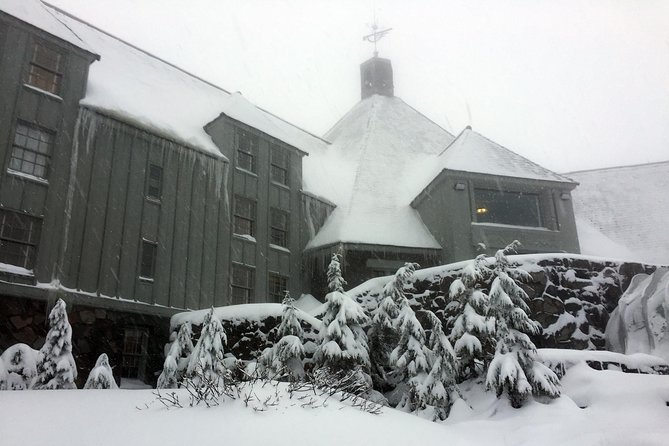
This is the kind of day trip I like when you’re short on time in Portland but still want big scenery. You start with Mt. Hood and Timberline Lodge, then shift to Hood River’s orchard-and-brew energy, and finish in the Columbia River Gorge where the waterfalls and basalt geology keep coming.
The schedule is packed, yes, but it’s also built around “smart stops.” You’ll get real time at the big hitters (like Timberline Lodge and Multnomah Falls) and then shorter pauses for photo angles and roadside curiosities. That mix is what makes the day feel full rather than frantic.
Comfort and small-group attention make a real difference
The tour’s biggest practical win is how it’s set up: a maximum of 14 travelers, an air-conditioned vehicle, and a PA system so everyone can hear the guide. On mountain days, that combo matters. Even if you’re an early bird, you’ll still appreciate the shade, the AC, and the ability to follow what’s happening without straining.
In the field, I like when a guide can adjust on the fly. This tour has that flexibility in practice. When guides like Cher and Halle are at the wheel, the day tends to feel tailored: people with a photo mission get time at the right angles, and people who want context get it while you’re driving between stops.
Mount Hood: Timberline Lodge views and the Palmer Glacier area
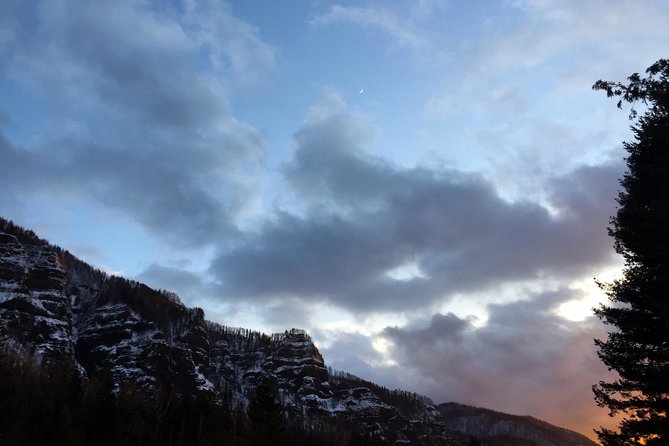
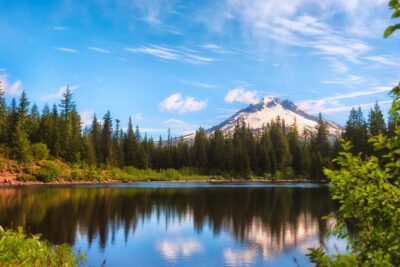
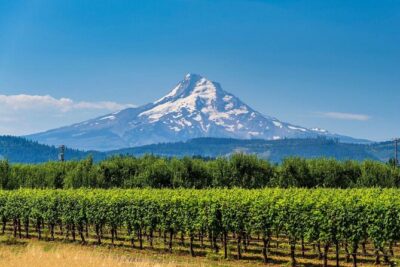
Mt. Hood is a stratovolcano and the highest peak in Oregon. It’s also one of those rare mountains that’s visible from a lot of northern Oregon and southern Washington—so even before you arrive, you often get that sense of what the day will deliver.
At Timberline Lodge, you’ll spend about 1–2 hours on the mountain just below the Palmer Glacier. What I’d tell you to expect here is less a museum stop and more a viewpoint stop with options. If the weather cooperates, this is where Mt. Hood becomes the main character of the day.
Timberline Lodge itself: a 1930s landmark with year-round mountain life
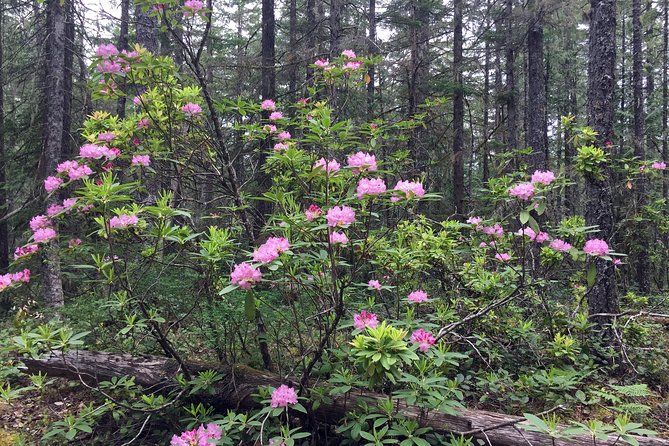
Timberline Lodge isn’t just scenery. It’s a Works Progress Administration project, dedicated in 1937 by Franklin Delano Roosevelt. It’s a National Historic Landmark, perched above timberline, which is why the views feel so open.
You’ll also get a separate, shorter window to explore the lodge area—around 30 minutes—so you’re not only standing outside. Inside, you can split your time among interpretive displays and food or drink venues. In summer, there’s hiking available; in winter, there’s snowplay. The tour description makes it clear that the lodge is the only ski resort in the US open every month of the year, which tells you the place is built for serious seasonal variety.
Practical tip: if the day starts gray, stay optimistic. Mt. Hood weather can change fast. If you get a window of clear skies, prioritize your time for the best views rather than overthinking it.
Quick orchard stops: Draper Girls and Apple Valley
After Timberline, the pace shifts from mountain drama to something gentler. Two orchard/country-store stops are built in, and both are designed to be short so you don’t lose the momentum of the day.
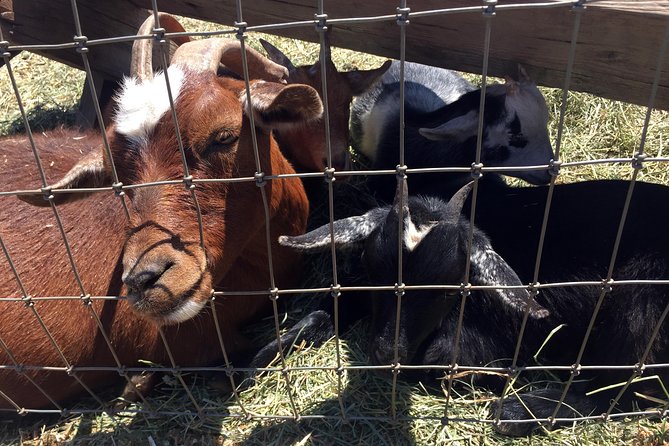
At Draper Girls Country Farm (about 20 minutes), depending on the season, you can buy fresh fruit and preserves, and you can also pet the cats and goats. This is also one of those stops where you may get a “Mt. Hood framed in the background” photo if weather cooperates.
Apple Valley Country Store (also around 20 minutes) leans into comfort food. You can grab fruit and preserves, and if you’re lucky with timing and season, you’ll find homemade pies and huckleberry milkshakes. These are the kinds of snackable treats that work well on a long day when lunch isn’t included.
Hood River lunch hour: windsports, breweries, and real downtime
You’ll stop in Hood River and spend about an hour for lunch. This is where the day gives you breathing room. No rushing off to the next viewpoint the moment you sit down.
Hood River is often called the windsurfing capital of the world, and it has a reputation for craft breweries that’s strong on a per-capita basis. Translation for you: you’ll find plenty of choices if you want something quick, something local, or something that feels like a reward after Mount Hood.
Since lunch isn’t included, this is your chance to match your meal to your taste. If you don’t want a heavy sit-down, look for something casual nearby. If you want a sit-down meal, the extra hour is enough to do it without feeling like you’re sprinting.
Columbia River Gorge National Scenic Area: why the scenery changes fast
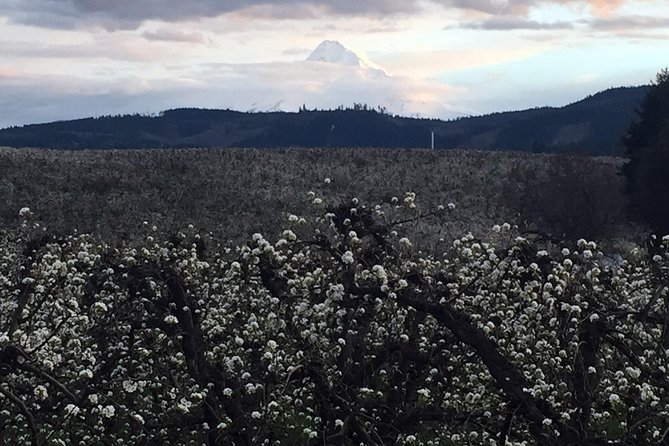
Once you’re in the Columbia Gorge National Scenic Area, the tour shifts from one big mountain to a whole system of cliffs, rivers, and waterfalls. The Gorge is 85 miles long, and over that stretch you get a plant community that changes dramatically between the west and east ends. That matters because the photos you’ll take won’t just be “pretty.” They’ll look different from one area to the next, and your brain will feel the change while you’re driving.
You’ll have about 3 hours in this section, which is a nice amount of time for viewpoints that require pull-offs and for short waterfall moments. If you care about photos, this is also where you’ll start seeing patterns: basalt terraces, river turns, and the way water finds the breaks in the rock.
Rowena Crest viewpoint: the eastern Gorge photo angle
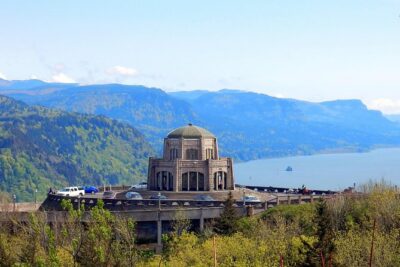
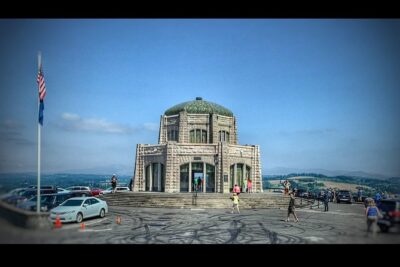
Rowena Crest Viewpoint is one of those short stops that packs a lot of photo power. It’s specifically called out as the quintessential photo opportunity for the eastern Gorge.
This matters because Rowena Crest is one of the angles that helps you understand scale. You’re looking out across a wide sweep, not just at one waterfall. Even if you’re not a photographer, it’s the kind of stop that helps you feel what this region is all about.
The historic highway drive: Switzerland-inspired engineering and waterfall passes
The tour includes driving portions of a historic 74-mile highway inspired by Switzerland’s Axenstrasse. The important practical note is that you can no longer drive the full route, so you’ll see selected stretches—especially the sections where the road design and the waterfalls meet.
As you drive, keep an eye out for basalt terraces and waterfall sightings. This is the “in-between” part of the day that often becomes your favorite memories. It’s not just the destination; it’s the road itself, with stops made when there’s something worth pulling over for.
Pacific Crest Trail crossing and the Bonneville Dam era stops
There are a few stops here that are more about place identity than dramatic scenery in one single frame.
One is the Columbia River crossing for the Pacific Crest Trail, noted as the lowest point on that trail and linked to a Native American legend that explains local geology. Another is Bonneville Dam, described as the first Public Works Administration dam on the Columbia River, completed in 1938.
Then you’ll also see that the area includes the largest hatchery in the state of Oregon. These segments give you a sense of how humans and ecosystems are intertwined along the river, not just how it looks from the side of a road.
The monolith and quirky waterfall moments you can’t slow down for
Between the major anchors, you’ll get several quick “watch fast or you’ll miss it” sights. One is a huge free-standing monolith described as the fifth largest of its kind in the world, an 848-ft columnar basalt plug similar in size and composition to Devil’s Tower in Wyoming.
Another is a quirky waterfall you pass by where the best strategy is simple: be ready as you approach, not after. You’ll also see a feature known as Thor’s Hammer, described as a rock formation with a crown-shaped building sitting atop and a waterfall coming down the side.
And yes, there’s even a moment where the tour points out a rock that inspired North America’s oldest continuously running nudist beach. It’s odd on purpose. Part of the joy of the Gorge is how scenic spots also carry stories you’d never guess from a postcard.
Multnomah Falls: the top waterfall in Oregon and the big payoff
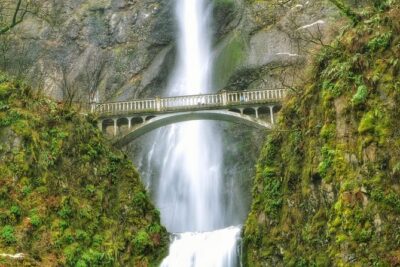
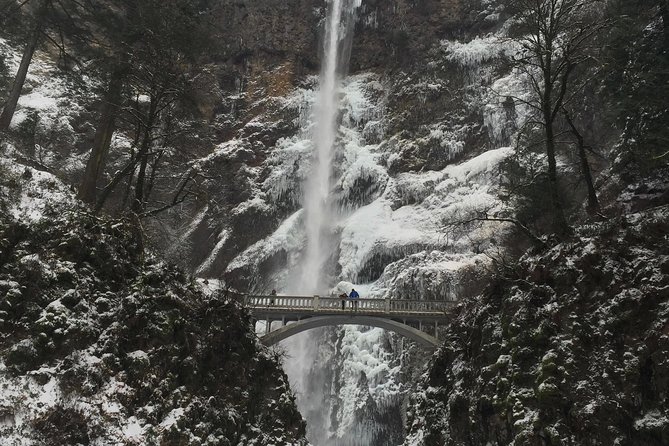
Multnomah Falls is the tallest waterfall in Oregon, with a combined height of 620 feet. You’ll have about 30 minutes here, which is enough time to get your bearings and enjoy the falls closely without turning it into an all-day hike.
This is also a great stop for repeat-photo tactics. If the weather is clear, get your wider shots first, then circle back for tighter views. If it’s misty, don’t be disappointed—falls often look better when the air is cool and damp. The key is to use your time intentionally, because 30 minutes evaporates fast once you start watching where water is dropping.
You’ll also pass by another cute waterfall close to the main stop area, so you get a little extra water drama without adding a huge time cost.
Crossing the Sandy River: the trip back toward Portland
As you wrap up, you’ll cross the Sandy River between the Columbia Gorge and Willamette Valley. The Sandy’s headwaters are described as coming from a glacier on Mt. Hood, and the river is known for Steelhead and Chinook runs.
This is also where the tour offers a subtle but meaningful angle on nature management: dams on three Columbia tributaries have been removed since 2007, and the Sandy is included in that group. It’s a reminder that the Gorge isn’t just a set of waterfalls you drive past. It’s a living system with changes you can’t see from a distance.
By the time you’re crossing, the day usually shifts from “look at everything” to “let it land.” If you’re tired, that’s normal. You’ve done a lot of visual heavy lifting.
Price and value: what $139 buys you in real time
At $139 per person for roughly 8 hours, this tour is priced like a day of guided driving plus paid entry where needed. Admission tickets are listed as free for the stops, which helps keep the day from turning into an expense trap.
You’re also paying for logistics you’d otherwise have to manage yourself: an air-conditioned vehicle, bottled water, snacks, and a guide who connects the dots between volcano geology, WPA-era architecture, orchard culture, and Gorge river systems.
Lunch isn’t included, so you will spend some money on food—plan for it. But compared to self-driving a full loop with multiple pull-offs and timing, the value is in the ease. You sit back, you hear the story, and you get to focus on the views.
Best fit: who should book this Hood–Columbia loop
This tour is a strong match if you want a first-time introduction to two big regions at once: Mt. Hood and the Columbia Gorge. It’s also a great choice for people who don’t want to coordinate a full road trip, but still want multiple stops rather than just one main attraction.
It’s also ideal if you care about photography. You’ll hit scenic viewpoints like Rowena Crest and major waterfall time at Multnomah Falls, plus several smaller roadside moments where the best photos come from being ready with your camera.
If you hate long days or you’re extremely weather-sensitive, plan around that. Since the experience requires good weather, your enjoyment will rise and fall with the forecast.
Should you book it?
I’d book this tour if you want a structured day with real payoffs: Timberline Lodge views, a couple of orchard breaks, Hood River lunch time, and a Gorge loop that delivers multiple waterfall moments without needing to drive yourself all day.
I’d think twice only if your priority is a slow, unhurried hiking-style outing. This is more of a scenic drive with intentional stops than a single long trail day. If you’re okay with that style—and you’re ready for a lot of scenery in one go—this is a solid use of your time in Portland.
FAQ
What time does the tour start and where does it end?
The tour starts at 9:00 am and ends back at the meeting point at 523 NE 19th Ave, Portland, OR 97232, USA.
Is pickup available?
Yes. Pickup locations are flexible, and the provider contacts you the evening before to confirm pickup time and location.
How long is the tour?
It’s listed as approximately 8 hours.
What’s included, and what isn’t?
Included items are snacks, bottled water, an air-conditioned vehicle, and a PA system so the back row can hear the guide. Lunch and gratuities are not included.
How many people are in the group?
This tour has a maximum of 14 travelers.
Does the tour run in any weather?
The experience requires good weather. If it’s canceled due to poor weather, you’ll be offered a different date or a full refund.
FAQ
Is the tour conducted in English?
Yes, the tour is offered in English.
Are admission tickets included for the stops?
Admission tickets are listed as free for the stops mentioned, so you don’t have to pay entry fees for those specific locations.
Are service animals allowed?
Yes, service animals are allowed.
How far in advance should I book?
On average, it’s booked 18 days in advance.
When will I receive confirmation?
Confirmation is received within 48 hours of booking, subject to availability.
What’s the cancellation window?
Free cancellation is available, and you must cancel at least 24 hours before the experience’s start time for a full refund.
More Tour Reviews in Portland
- Multnomah Falls and Columbia River Gorge Half-Day Hiking Tour
★ 5.0 · 2,108 reviews - Columbia River Gorge Waterfalls Tour from Portland, OR
★ 5.0 · 1,278 reviews - Multnomah Falls and Columbia River Gorge Waterfalls Tour Morning
★ 5.0 · 913 reviews - Full-Day Guided Oregon Coast Tour from Portland
★ 5.0 · 816 reviews - Mt Hood Day Trip from Portland to Multnomah Falls and Hood River
★ 5.0 · 695 reviews
More Mount Hood Day Trips
- Mt Hood Day Trip from Portland to Multnomah Falls and Hood River
★ 5.0 · 695 reviews - Columbia River Gorge Waterfalls & Mt Hood Tour from Portland, OR
★ 5.0 · 585 reviews - Columbia Gorge Waterfalls and Mt. Hood Tour – Full Day
★ 5.0 · 339 reviews - Full-Day Mt Hood Waterfall Tour with Lunch and Wine Included
★ 5.0 · 205 reviews - Mt Hood, Waterfalls, and Wine Tour
★ 5.0 · 87 reviews
Just In: The Newest Portland Tour Reviews



Mount Hood Scenic Tours, compared.
 ★ 5.0Mt Hood Day Trip from Portland to Multnomah Falls and Hood RiverFrom $133695 reviews
 ★ 5.0Columbia River Gorge Waterfalls & Mt Hood Tour from Portland, ORFrom $149585 reviews
 ★ 5.0Columbia Gorge Waterfalls and Mt. Hood Tour – Full DayFrom $129339 reviews
 ★ 5.0Full-Day Mt Hood Waterfall Tour with Lunch and Wine IncludedFrom $179205 reviews
 ★ 5.0Mt Hood, Waterfalls, and Wine TourFrom $14787 reviews
 ★ 5.0Mt. Hood Loop Tour from PortlandFrom $12862 reviews
 ★ 4.8From Portland: Waterfalls, Mt Hood, and Wine Day TourFrom $15561 reviews
 ★ 5.0Mount Hood & Columbia River Gorge Air Tour by Envi AdventuresFrom $25949 reviews
Browse the lists this tour appears in